PPT meetings with the families of your older students can be complex.
As your older students progress through each grade, the academic demands increase and expectations mount as they prepare their entry into the “real world.”
So, how can we help support our students and families? Here are 3 tips to help them, paired with informative visuals they can walk away with!
1. Simplify Language Therapy with this Visual
As students get older, it’s very common to have a variety of language goals on their IEPs. Since language encompasses a wide range of skills, it can help to make your goals and intervention more clear with Bloom & Lahey’s Taxonomy of Language. Visuals like this can help make these abstract concepts feel more organized and clear for families.
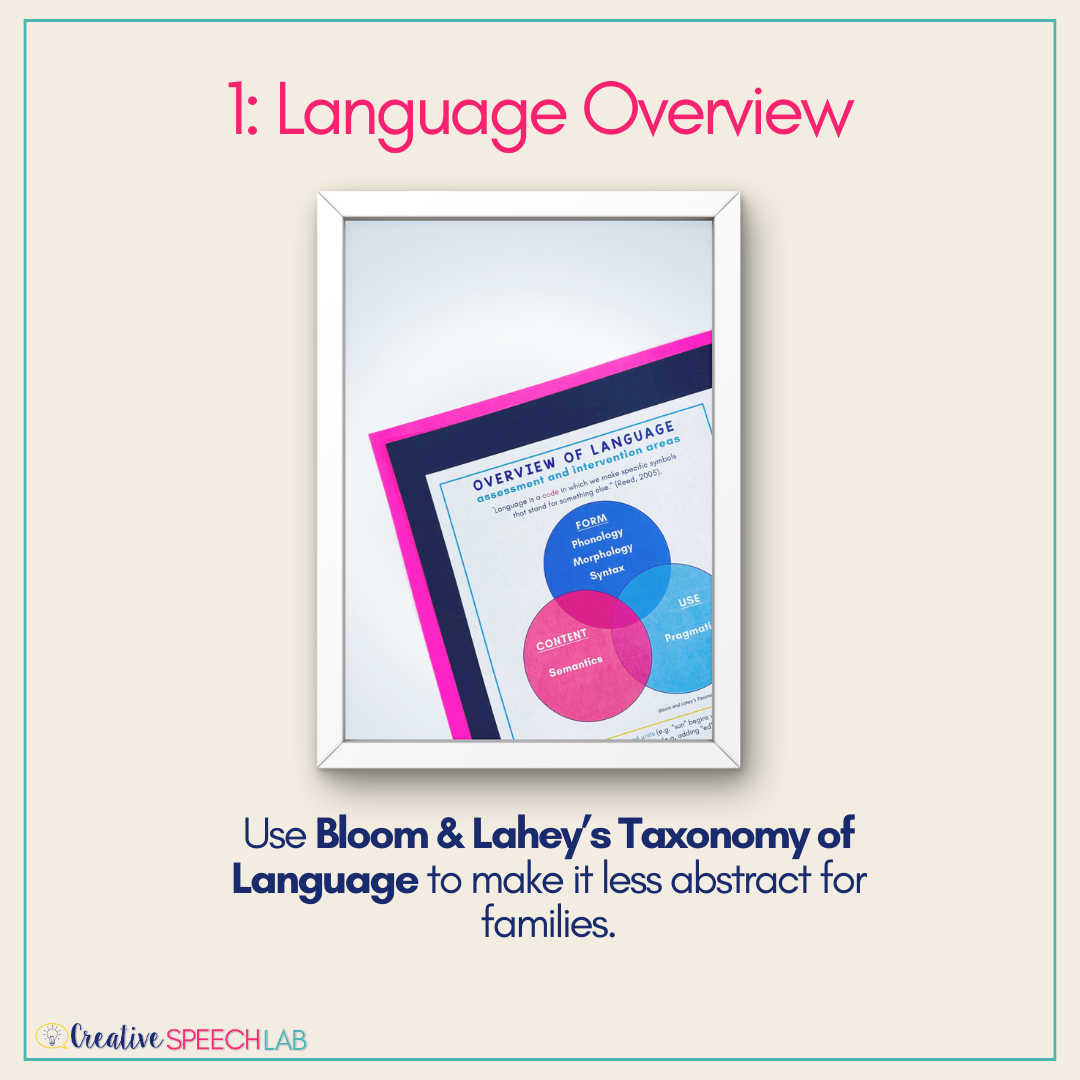
(This handout is a part of Older Student Speech & Language Handouts)
2. Show the Job Connection
Has a family ever asked you why your language-impaired older student needs speech?
After using the above visual (with Bloom & Lahey’s taxonomy of language) to explain what language intervention entails, now it helps to showcase the critical role speech and language skills play in the workplace with this visual!
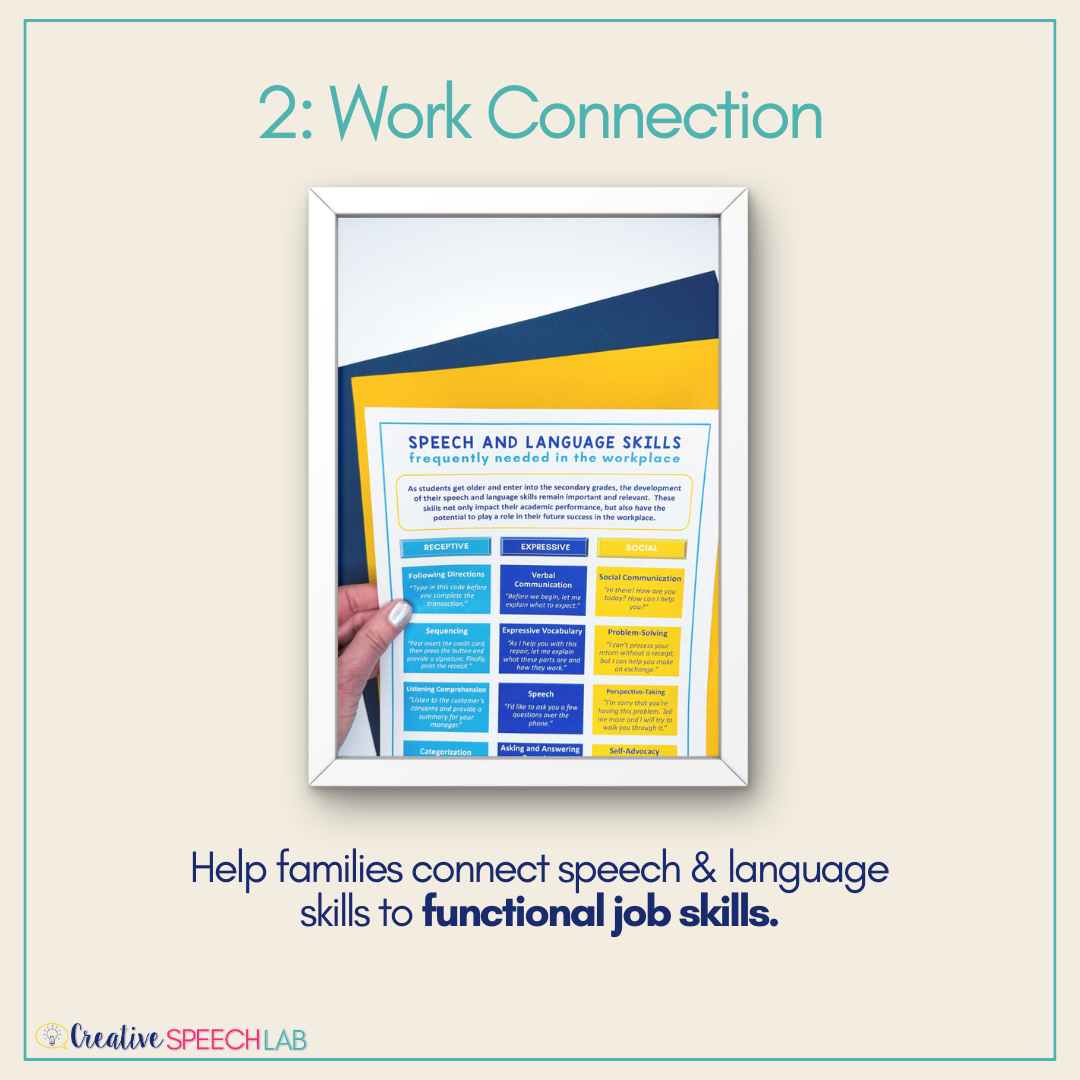
(This handout is a part of Older Student Speech & Language Handouts)
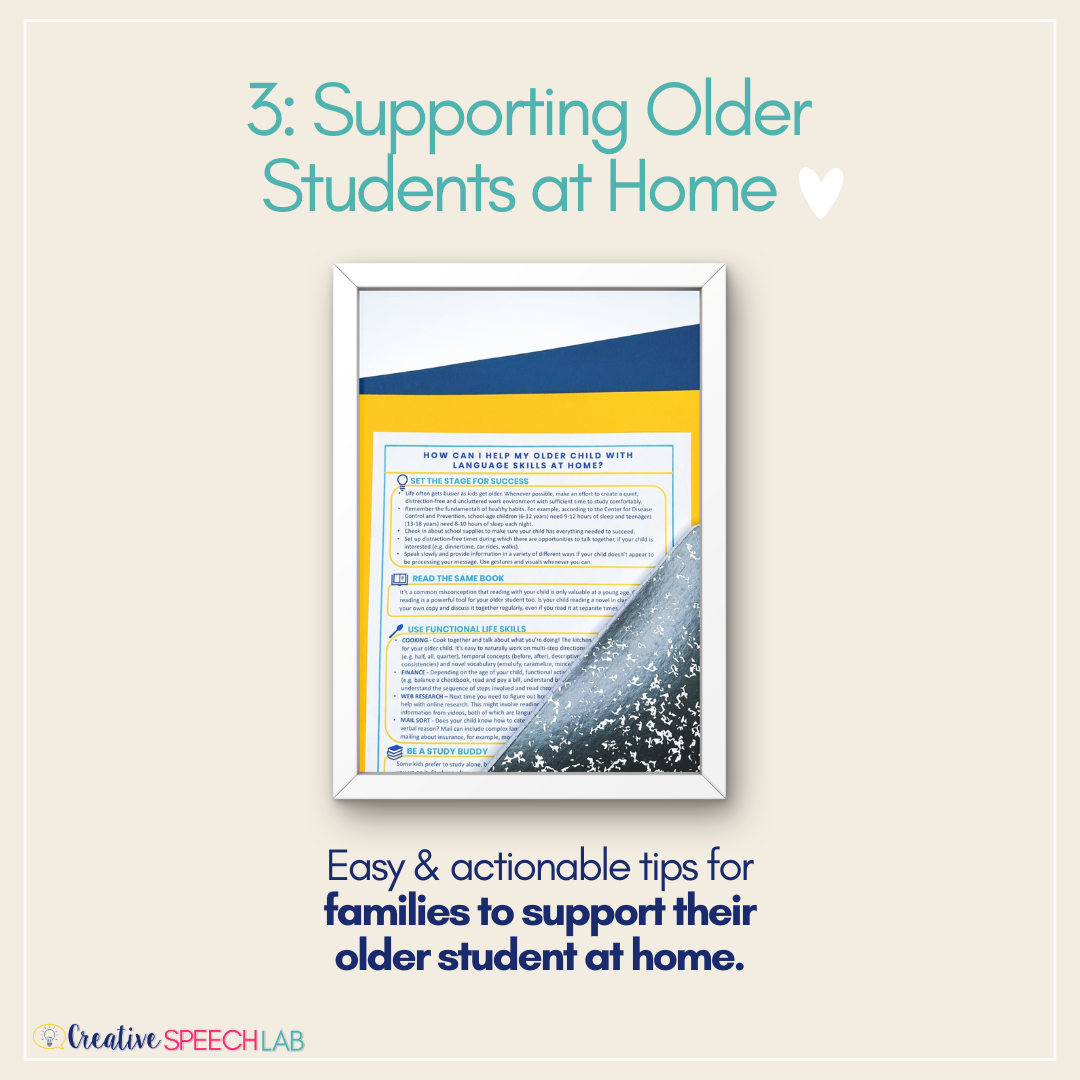
3. Provide Specific Tips for Home Support
Even as older students become increasingly independent, there are still many ways that families can support them at home!
Giving families this list of actionable tips they can walk away with at a meeting can be very empowering for them and helpful for your students!
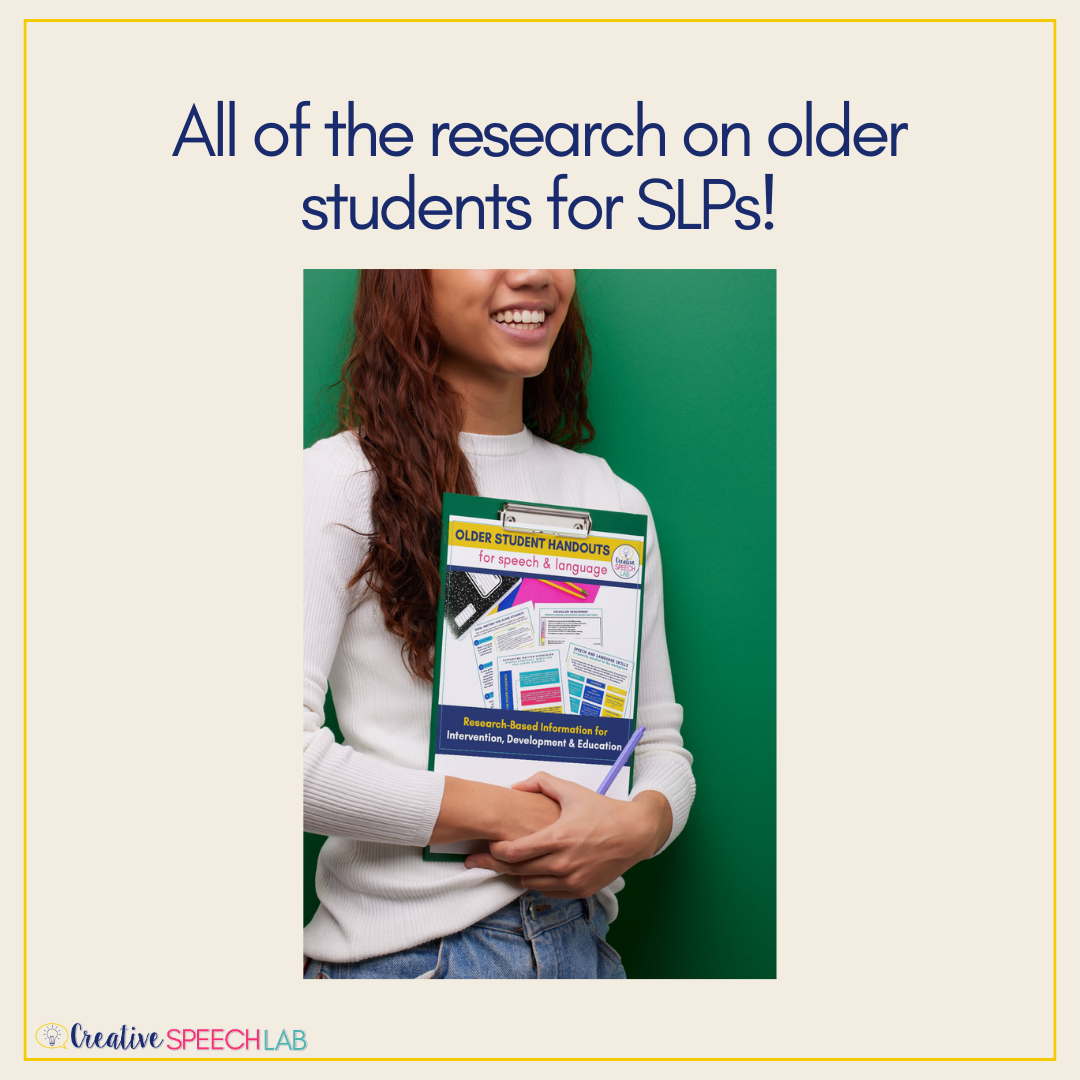
In addition to these handouts, it can be helpful to have research-based information for older students ready to go in the areas of:
- INTERVENTION (goal-writing, articulation in older students, building rapport, generalization, written expression, vocabulary intervention, self-advocacy, motivation, social-emotional supports)
- DEVELOPMENT (differences between early and later speech/language development, language and cognitive development, conversational skills over time, MLU in upper grades, executive functioning, comprehension of linguistic ambiguity, and developmental milestones in the areas vocabulary, figurative language, syntax, pragmatics, and literacy
- STUDENT INVOLVEMENT (understanding goals, self-advocacy strategies, inferencing steps, conversation tips, root words, metalinguistic awareness strategies)
- FAMILY & STAFF MEETINGS (academic language skills found in Common Core Standards, overview of language assessment & intervention, home support, speech & language skills needed in the workplace)
Check out all 30 color and black/white, research-based handouts for your older students here!
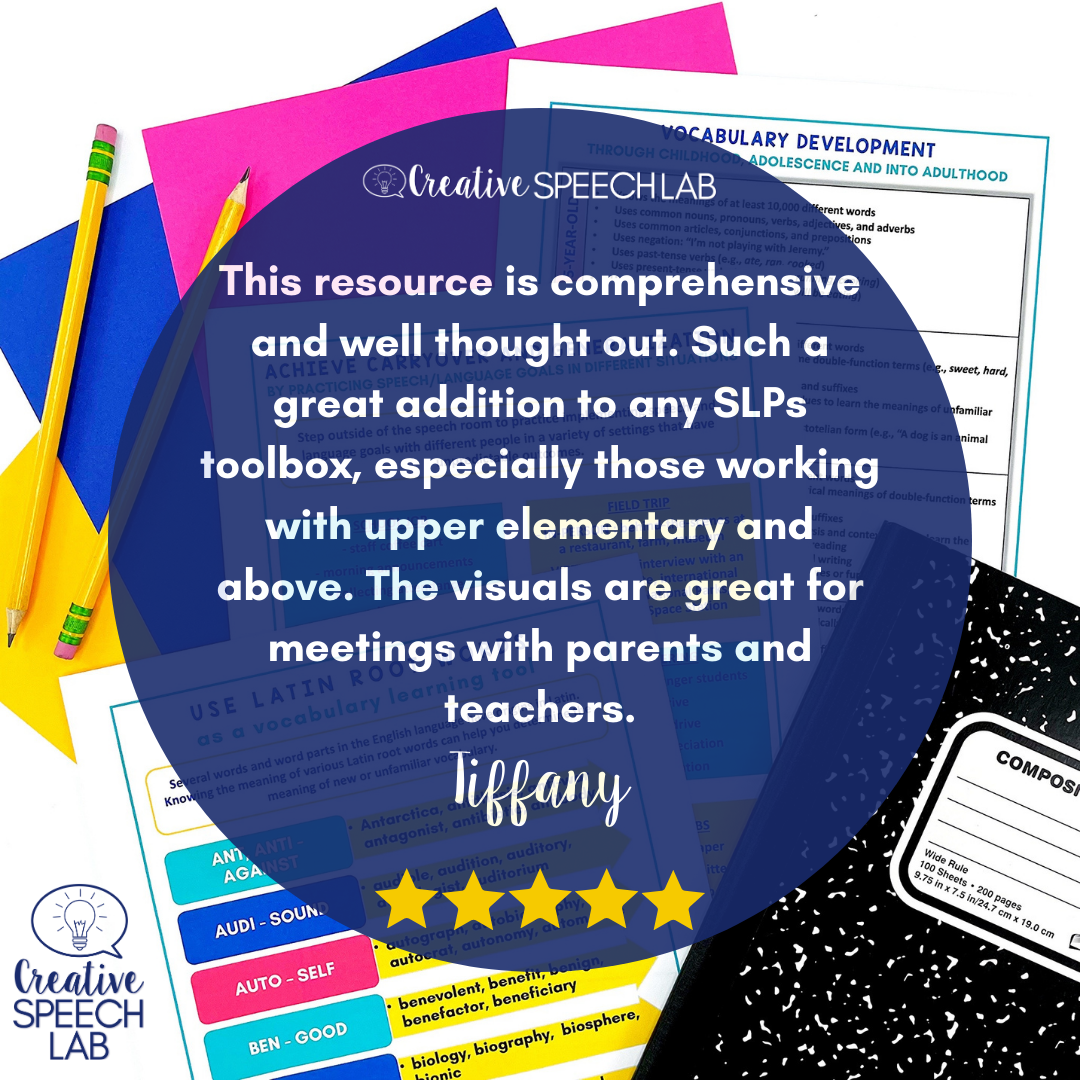
What other SLPS are saying about Older Student Speech & Language Handouts…
The process of supporting older students and families can feel like a meaningful collaboration! I hope these tips and handouts help you to help them!