We don’t often think of humor as an intervention tool.
But when used intentionally in vocabulary activities, humor allows us to build:
- semantic webs
- contextual cues
- memorable narratives
Today I’m sharing 3 specific examples of how you can teach tier 2 vocabulary, multiple meaning words, and root words in the context of humorous narratives!
1. Teach Tier 2 Vocabulary
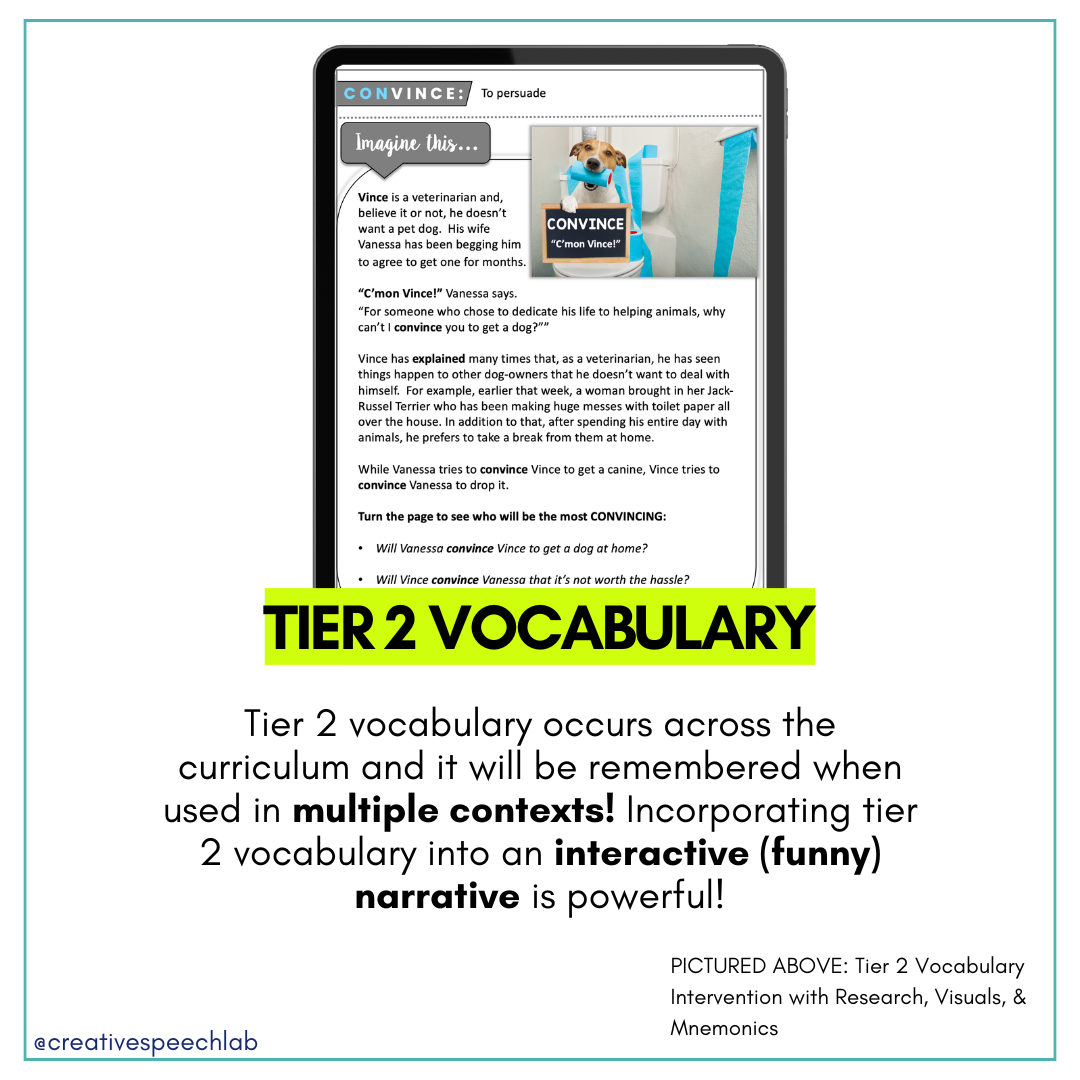
Tier 2 vocabulary words occur at a high frequency and appear across many subject areas. They elevate language from conversational to academic and have strong utility for speaking and writing across the curriculum.
In short, tier 2 vocabulary is important to teach!
Let’s face it. It can be overwhelming to implement evidence-based vocabulary instruction while trying to engage your older students.
I dug into the research AND my creative side to create Tier 2 Vocabulary with Research, Visuals, & Mnemonics, which includes 21 tier 2 vocabulary units with real photographs, engaging mnemonics, relatable and humorous narratives, graphic organizers, and no prep activities.
Take a closer look at these engaging vocabulary activities here.
2. Teach Multiple Meaning Vocabulary
What do you think would work better for your students? Providing them with a list of each definition of the word “blue,” OR this fun narrative?
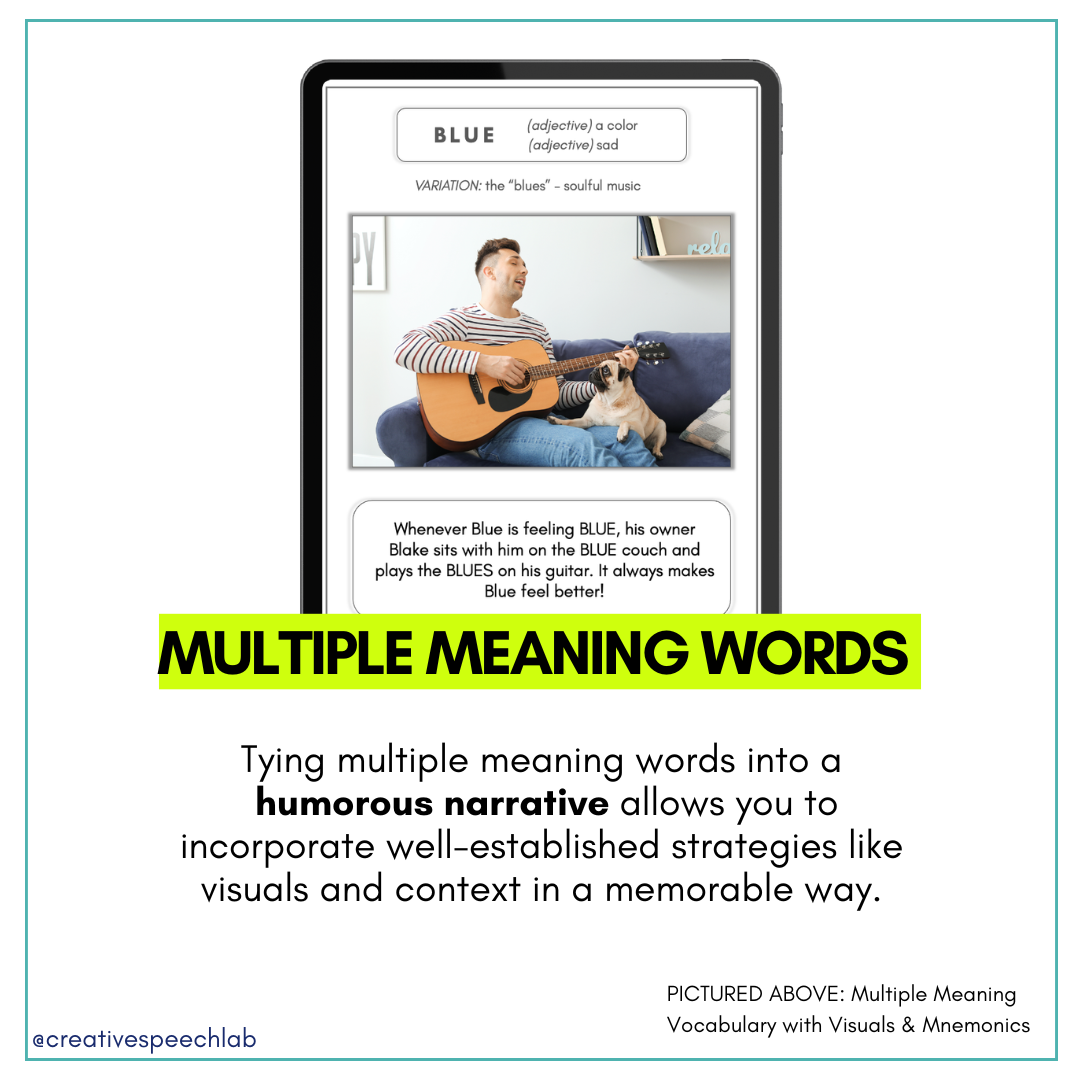
When you think about it, it makes perfect sense. Language and vocabulary are all about meaning and stories. Whenever we can tie multiple meaning word definitions into a narrative, our students are more likely to internalize and connect all of the pieces together!
Take a look at Multiple Meaning Vocabulary with Visuals & Mnemonics here!
3. Teach Greek & Latin Root Words
Root words are powerful because a single word unit can help students understand the meanings of many different words!
Rote memorization of words like “ben” and “mal” can help, but embedding the words into a humorous narrative (like this one) is more likely to make them stick! Vocabulary activities that bring an emotional response (i.e. laughter) are more memorable! Don’t you think?
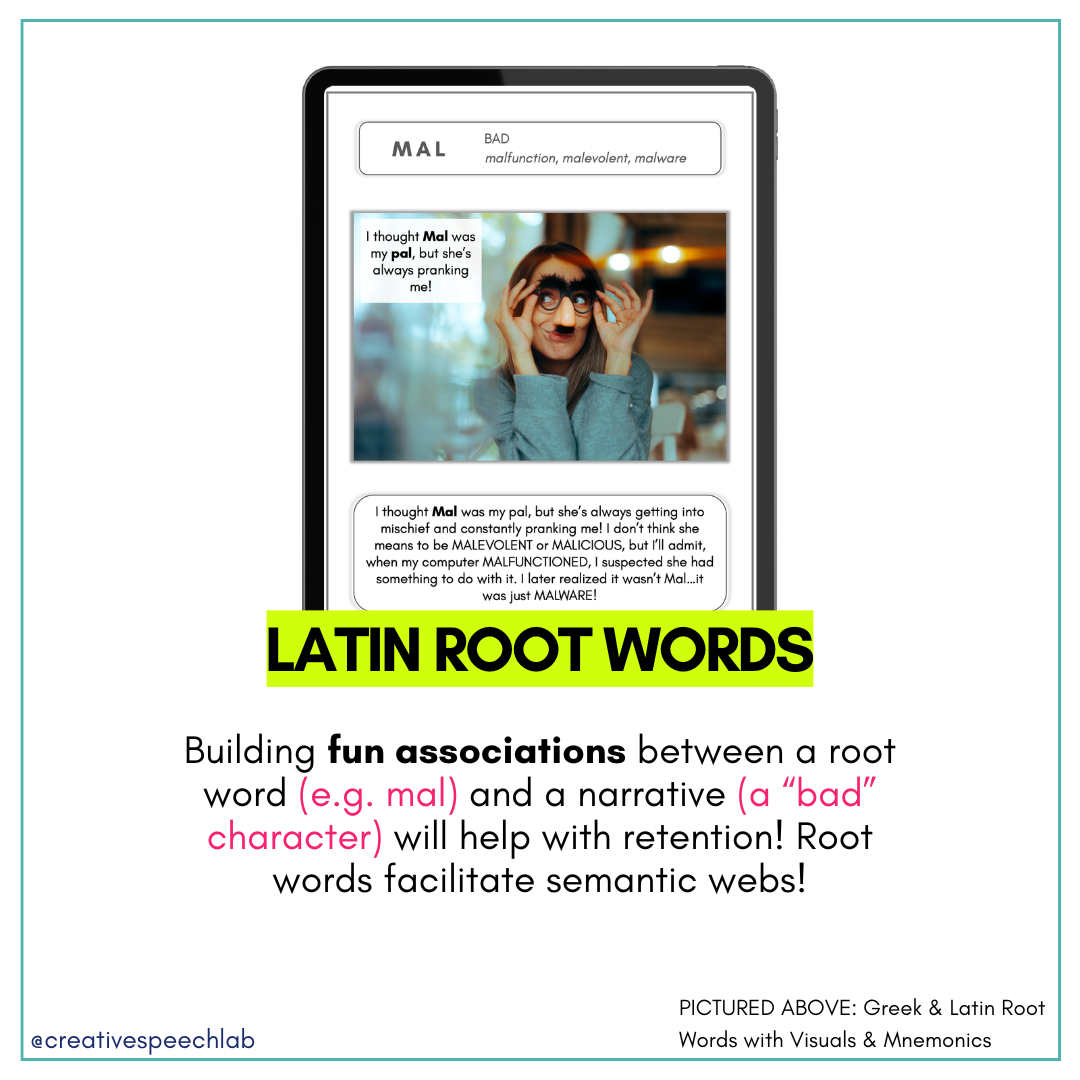
Mal may be malevolent at times, but she isn’t the reason my computer malfunctioned! (Couldn’t resist).
My favorite part of teaching this kind of vocabulary is engaging students in the process of making fun associations, connections, and ultimately expanding their vocabulary repertoire.
Check out these Greek & Latin Root Words with Visuals & Mnemonics here!
What are your thoughts about incorporating some humor and meaningful narrative language into your vocabulary instruction? What types of vocabulary activities would you like to try first?